
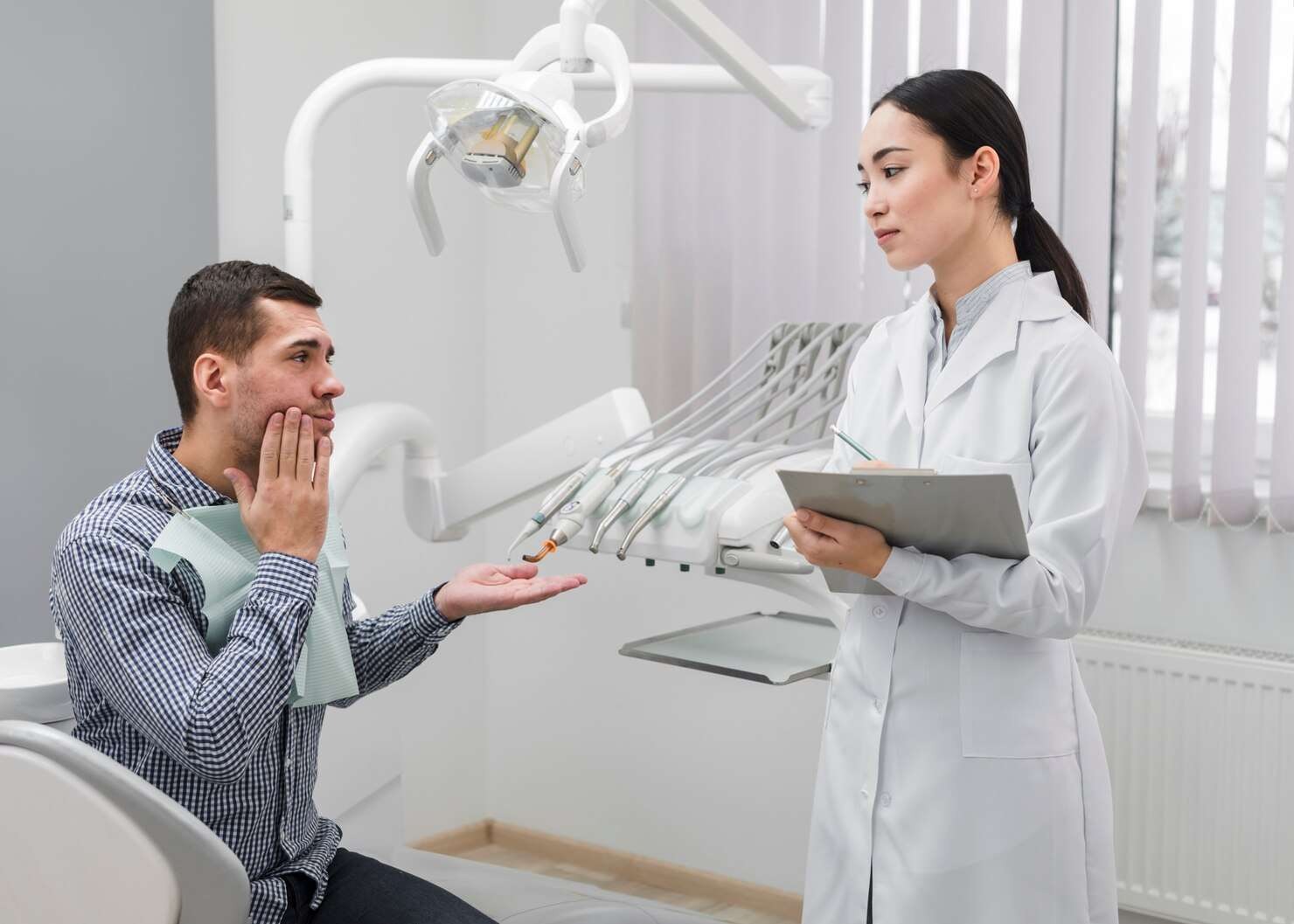
A tooth cracks on a Friday evening. Your kid gets hit in the mouth during hockey practice. You wake up at 2 a.m. with pain radiating through your jaw and no idea what to do. If you’re searching for information about a dental emergency in Windsor, you probably don’t have time to read through ten different articles.
This guide covers what qualifies as an emergency, what to do in the first 30 minutes, whether you need a dentist or a hospital, and how to think about the cost. We’ve based this on what we see at Dr. Gary Mannarino Dentistry, a dental clinic in Windsor, where we have helped local families handle urgent dental situations for many years.
If you think you’re having an emergency right now, call our office at (519) 255-1117 Ext. 10. We’ll help you figure out the next step.
Important: This guide is for general information only and does not replace an examination by a dentist or physician. If you have difficulty breathing or swallowing, rapidly spreading facial swelling, severe trauma, or uncontrolled bleeding, call 911 or go to the nearest emergency department immediately.
A dental emergency in Windsor includes severe tooth pain, a knocked-out permanent tooth, uncontrolled bleeding, worsening facial swelling, a broken tooth with exposed nerve tissue, or signs of infection.
Call a dentist immediately unless you have trouble breathing or swallowing, swelling spreading toward your eye, neck, or throat, a high fever with facial swelling, severe trauma, or uncontrolled bleeding. In those cases, call 911 or go to the nearest emergency room.
A dental emergency is any situation involving your teeth, gums, or mouth that needs immediate professional attention to relieve pain, stop bleeding, save a tooth, or prevent an infection from spreading. The key question: can this wait until the next available appointment, or does it need to be dealt with today?
If you have severe pain, uncontrolled bleeding, a tooth that’s been knocked out, swelling that’s getting worse, or a broken tooth with exposed nerve tissue, that’s an emergency. If you have mild sensitivity, a small chip with no pain, or a lost crown with no discomfort, it may be urgent but could potentially wait a day or two. When in doubt, call. We’d rather you call and find out it’s fine than wait and make things worse.
Some situations are medical emergencies, not just dental ones. If you have swelling spreading toward your eye or neck, difficulty breathing or swallowing, a high fever along with facial swelling, severe trauma, or bleeding that will not stop, call 911 or go to the nearest emergency room. These symptoms can indicate a spreading infection or injury that goes beyond what a dental office can manage on its own.
If you’re dealing with something that fits the description of a dental emergency in Windsor, our team will do our best to see you as soon as possible.
| Dental Issue | Emergency Level | What to Do |
| Knocked-out permanent tooth | Emergency | Call immediately; keep the tooth moist in milk if it cannot be placed back in the socket |
| Severe toothache with swelling | Emergency | Call a dentist the same day |
| Swelling spreading toward the eye, neck, or throat | Medical emergency | Go to the ER or call 911 |
| Difficulty breathing or swallowing | Medical emergency | Call 911 |
| Broken tooth with exposed nerve tissue | Emergency | Call a dentist the same day |
| Lost crown with no pain | Urgent, not always an emergency | Call to schedule care |
| Small painless chip | Usually not an emergency | Book an appointment soon |
| Bleeding that will not stop | Emergency | Apply pressure and seek care immediately |
After years of practice in Windsor, we’ve seen just about every type of dental emergency. Some are dramatic, like a tooth knocked out on the ice rink, and others start quietly, like a dull ache that turns into something you can’t ignore. Here are the ones we treat most often.
Tooth pain that comes on suddenly and keeps getting worse is one of the most common reasons people call us. It can be caused by deep decay reaching the nerve, a cracked tooth, or an infection that’s developed into an abscess, which is a pocket of pus at the root of the tooth or in the surrounding gum.
Signs include throbbing pain, swelling, a bad taste in your mouth, and sometimes a fever. An abscess won’t resolve on its own. It needs professional treatment to drain the infection and address the cause. Antibiotics may help control infection temporarily in some cases, but the source of the dental infection still needs to be treated.
A chipped tooth emergency in Windsor is more common than you might think. Biting down on something hard, taking an elbow during a basketball game, or grinding your teeth at night can cause a fracture.
Small, painless chips aren’t always urgent, but a crack that reaches the nerve, a break with sharp edges cutting into your tongue or cheek, or a tooth broken close to the gumline needs prompt attention. Even painless cracks can let bacteria in and infect the pulp, so call the same day.
A knocked-out tooth is one of the most time-sensitive emergencies there is. When a permanent tooth is completely displaced, the window for successfully reimplanting it starts closing fast. Ideally, the tooth should be back in the socket within 30 to 60 minutes. After that, the success rate drops significantly.
Knowing what to do before you get to the dentist can make the difference between saving and losing the tooth.
Important: If a baby tooth is knocked out, do not try to put it back in the socket. Call a dentist right away for guidance.
When a filling or crown falls out, the tooth underneath is exposed, causing sharp sensitivity and leaving it vulnerable to further damage. The remaining tooth structure can crack, decay can set in, or the nerve can become irritated.
Avoid chewing on that side, keep the area clean with gentle rinsing, and call us. If appropriate, we may be able to clean the tooth and re-cement the restoration.
Gum bleeding or swelling that won’t stop
Some bleeding after brushing isn’t unusual. But bleeding that doesn’t stop after 10 to 15 minutes of firm pressure, or gum swelling that keeps expanding, needs to be looked at.
This could signal advanced gum disease, an injury, or an infection. If the swelling comes with pain, fever, or a bad taste, it may be an abscess forming under the gumline.
The first 30 minutes after a dental injury or the onset of severe pain can significantly affect the outcome. Here’s what to do for the most common emergencies while you’re getting to our office.
This is the one where speed matters most:
Find the tooth. Pick it up by the crown, the white part, not the root. Touching the root can damage the cells needed for reattachment.
If it’s dirty, rinse it gently with water or milk. Don’t scrub it, and don’t use soap.
If it’s a permanent tooth and you can safely place it back in the socket, do so. Bite down gently on clean gauze to hold it in place.
If you can’t reposition it, store it in a container of milk. If milk isn’t available, keep it between your cheek and gums if safe to do so, or use a saliva-soaked cloth. Be careful not to swallow it.
If it’s a baby tooth, do not put it back in the socket. Call a dentist right away.
Call us immediately. The sooner you’re seen, the better the chance of saving the tooth.
Rinse your mouth with warm water. If there’s bleeding, apply gentle pressure with clean gauze. Save any broken pieces. Sometimes they can be reattached.
Apply a cold compress to your cheek to reduce swelling, avoid chewing on that side, and call us. If the crack is large or very painful, we’ll want to see you the same day.
Rinse with warm salt water, about half a teaspoon of salt in a glass of water. Apply a cold compress to the outside of your cheek for 10 to 15 minutes at a time, with breaks in between.
Take over-the-counter pain medication as directed on the label, but avoid aspirin if you’re bleeding, since it can increase bleeding. Don’t place pain medication directly against the gum. It can cause chemical burns. Call us right away.
If swelling is spreading toward your eye, neck, or throat, or you have difficulty breathing or swallowing, call 911 or go to the nearest emergency room.
Keep the crown or filling if you can find it. We may be able to re-cement it. Rinse your mouth gently. Avoid chewing on that side and stay away from very hot, cold, or sweet foods until you’re seen.
A small amount of dental cement from a pharmacy can provide temporary protection, but it’s not a substitute for professional care. Call us as soon as possible.
Call a dentist for toothaches, broken or chipped teeth, knocked-out teeth, lost fillings or crowns, and most dental pain or swelling without systemic symptoms. Dental offices have the tools and expertise to diagnose and treat these properly. At our Windsor office, we can take digital X-rays, assess the damage, and provide treatment. These are things a hospital ER typically can’t do.
Go to the ER or call 911 for swelling spreading toward your eye, neck, or throat; difficulty breathing or swallowing; a high fever with facial swelling; severe trauma; or uncontrolled bleeding that won’t stop after 15 minutes of firm pressure.
In Windsor, Windsor Regional Hospital’s emergency departments can manage acute swelling, infection control, bleeding, and pain short-term. But they generally can’t repair broken teeth, reimplant knocked-out teeth, or provide fillings or crowns. Antibiotics may help temporarily in some situations, but the underlying dental problem still needs treatment.
If you’re unsure, call us first. We can assess the situation over the phone and tell you whether to head to the hospital or come straight to the office.
Cost is a real concern for most people, especially when an emergency catches you off guard. Here’s how coverage typically works in Ontario, with the caveat that plan details change and you should verify with your specific provider.
Does OHIP cover dental emergencies in Ontario?
For most adults, OHIP does not cover dental care, including emergency treatment. There are limited exceptions: certain hospital-based dental surgeries may be covered, and programs like Healthy Smiles Ontario provide coverage for eligible children and youth under 18.
If you receive Ontario Works or ODSP, there may be emergency dental coverage through your municipal public health unit. We recommend confirming eligibility directly with your caseworker, provider, or the Windsor-Essex County Health Unit.
Most private dental insurance plans in Ontario cover emergency treatment, but specifics depend on your plan. Typically, plans cover diagnostic services like X-rays and exams, restorative work like fillings and crowns, and sometimes root canal therapy to varying degrees.
You’ll usually pay a deductible or co-pay. At our office, we accept most insurance plans, help with claim processing, and provide quotes before proceeding with treatment.
Many people don’t have dental insurance, and that shouldn’t keep you from getting emergency care. Delaying treatment usually leads to more complex and expensive treatment later. An infection that could have been managed with a filling may require a root canal or extraction if left alone.
We accept multiple forms of payment and will explain your options clearly before treatment begins. The most important thing is to call.
Not every emergency can be prevented. Accidents happen. But many of the emergencies we treat could have been avoided with a few proactive habits.
This is the single most effective way to prevent knocked-out teeth and fractured roots. We offer custom-fitted sports mouthguards that protect better than boil-and-bite versions from the store. If you or your child plays hockey, basketball, or any contact sport in Windsor, this is worth doing.
Opening packages, cracking nuts, or biting on pens and ice can fracture teeth. It sounds obvious, but we see it regularly.
Regular checkups let us catch small problems, like a hairline crack, early decay, or a worn filling, before they become emergencies. A filling that’s starting to fail can be replaced during a routine visit. A filling that breaks on a Saturday night becomes an emergency.
Bruxism puts enormous pressure on teeth over time and can cause cracks and fractures. If you wake up with jaw pain or your partner notices grinding sounds, talk to us.
If you have older dental work, don’t ignore it. Fillings and crowns have a lifespan, and it’s worth having large, old fillings checked before they fail.
If you’ve never had a dental emergency before, you might be anxious about what happens when you walk through the door. Here’s what the process looks like at our office.
First, we’ll get you in as quickly as possible. When you call, we’ll ask about your symptoms to gauge urgency. If the situation is serious, such as a knocked-out tooth, severe swelling, or significant pain, we’ll make every effort to see you the same day.
When you arrive, we’ll start with an exam, which may include digital X-rays to see what’s happening below the surface. We’ll explain what we find in plain language: what’s wrong, what we recommend, and what it will cost.
Treatment could be as straightforward as re-cementing a crown, or it might involve draining an abscess, starting root canal therapy, or extracting a tooth that can’t be saved. We always aim for the most conservative approach that gives you a strong, long-term result.
If you’re a new patient, you don’t need to have been here before to get emergency care. We welcome new patients. Learn more about our team on our About Us page.
Any situation needing immediate professional attention to stop pain, control bleeding, save a tooth, or prevent infection from spreading. Common examples include severe toothache, a knocked-out tooth, a broken tooth with exposed nerve tissue, uncontrolled bleeding, worsening swelling, and a lost filling or crown with sensitivity. If you’re not sure, call. We’ll help you figure it out.
Call Dr. Gary Mannarino Dentistry at (519) 255-1117 Ext. 10. We’re at Devon Plaza Dental, 2665 Howard Ave #1, Windsor, ON. We’ll assess the situation and get you in as quickly as possible.
If you’re dealing with a medical emergency, such as difficulty breathing, difficulty swallowing, rapidly spreading swelling, severe trauma, or uncontrolled bleeding, call 911 or go to Windsor Regional Hospital’s emergency department first.
A small chip with no pain and no sharp edges may not be urgent, but you should still call to be seen soon. A larger break, a crack with pain, sharp edges cutting into your cheek, or a tooth broken near the gumline needs same-day attention. Even painless cracks can worsen quickly if bacteria enter the fracture.
Cost depends on what’s wrong and what treatment is needed. A simple exam and temporary fix costs less than a root canal or crown. We provide quotes before any treatment begins.
Most private dental insurance plans cover emergency treatment to some degree. If you don’t have insurance, we accept multiple forms of payment and will discuss your options.
Severe pain, uncontrolled bleeding, a knocked-out permanent tooth, worsening swelling, or a broken tooth with exposed nerve tissue is an emergency. Call right away.
Mild sensitivity, a small painless chip, or a lost crown with no discomfort may be able to wait a day or two. The safest approach is always to call and let us help you decide.
Yes. A dental infection can become an emergency if swelling spreads, pain worsens, you develop a fever, or you have difficulty swallowing or breathing. Seek immediate care if these symptoms occur. If swelling is spreading toward your eye, neck, or throat, or you have trouble breathing or swallowing, call 911 or go to the ER.
Mild discomfort may be able to wait, but severe, throbbing, or worsening pain should be assessed as soon as possible, especially if there is swelling, fever, a bad taste in your mouth, or pain that is not improving with over-the-counter medication. When in doubt, call a dentist for guidance.
Rinse with warm salt water. Apply a cold compress for swelling. Take over-the-counter pain medication as directed, but avoid aspirin if you’re bleeding. Don’t chew on the affected side. If a permanent tooth was knocked out, keep it moist in milk. If a crown fell off, keep it. Most importantly, call us so we can guide you through the next steps.
Dental emergencies are stressful, but they’re something we deal with every day at our Windsor office. The most important thing to remember: when in doubt, call. A two-minute phone call can save a tooth, prevent an infection from spreading, and give you peace of mind.
We’ve been helping Windsor families through dental emergencies for over years. Dr. Gary Mannarino and our team will move quickly, explain what’s happening in plain language, and get you comfortable as fast as we can, addressing the cause, not just masking symptoms.
If you think you’re having a dental emergency, call us now at (519) 255-1117 Ext. 10. You can also request an appointment online, and if you’re new to our practice, we’re happy to welcome you.